Showing posts with label Robert McKee. Show all posts

16 September 2009

Is Story Dead?

1101660408_400April 8, 1966 marked Time magazine's publishing of the provocative cover titled “Is God Dead?” spawning a knee-jerk reaction style of debate that swept through the country like a plague. Rather than apply critical thinking to this incendiary yet thought provoking piece of journalism, the masses reacted with hysterics, encouraged by social conservatives, already unsettled by the threat of change then sweeping through the country.

The title was a simple reimagining of Frederick Nietzsche’s statement, “Gott ist tott”, appearing in a significant number of his philosophical works. From “The Madman”:

“God is dead. God remains dead. And we have killed him. How shall we comfort ourselves, the murderers of all murderers? What was holiest and mightiest of all that the world has yet owned has bled to death under our knives: who will wipe this blood off us? What water is there for us to clean ourselves? What festivals of atonement, what sacred games shall we have to invent? Is not the greatness of this deed too great for us? Must we ourselves not become gods simply to appear worthy of it?”

Of course, what the ill-informed public did not grok was that Nietzsche did not mean for his statement to be interpreted in a literal sense; what he was expressing was that the “God” of the times – religion – was no longer a source of subjective wisdom.

Today, I would like for you to consider a new reimagining of this phrase. Is Story dead?

Consider the following quotes:

“When storytelling declines, the result is decadence.” ~ Aristotle

‘Deprive children of stories and you leave them unscripted, anxious stutterers in their actions as in their words.’ ~ Alasdair MacIntyre

Each year, over 50,000 scripts are registered at the Writers Guild of America, west. By including those scripts that have not been registered, the number is easily doubled. Each year, Hollywood spends over 1 billion dollars on story development.

Out of those numbers of scripts, less than 500 make it to the screen. Out of that number, less than a dozen are films of any true quality. Out of that dozen, we are told that five of these films (next year, it will be ten) are any good. Out of that five, we select one to represent what we believe is truth and excellence in storytelling. That one choice is often held up to the candle, to debate and discuss ad nauseum until the whole cycle begins again.

Technology has swept through Hollywood, like a raging inferno, incinerating each and every standard in its path. The upside to this is that film has never been less expensive – or more accessible – to produce. The price for this discount ticket is mighty – the devolution of story. Language has been reduced to a series of representational text bytes – “ruok” “wn2ply?” - and the enchanting “ull alw remain n my hart!”

This devaluation of language is then expressed in a devaluation of story, as language is the means by which we express story. The box office dependent story factory churns and regurgitates a series of half-truths, vomited up at the local Cineplex night after night. The public is so desperate for truthful storytelling that they then turn to the faux truth of the reality show – a double lie, as there is as much reality in THE BACHELOR and JON AND KATE as there is in DAYS OF OUR LIVES.

The societal implications of this decline are beyond disturbing. If art is a reflection of society, then, lords and ladies of the court, we are officially fucked. If art is a reflection of society, then we are a society of vapid, vain, entitled, thrill-seeking sociopaths with no need for change, or for transformation, because we’re working the system pretty damn well. If art is a reflection of life, we are, by large, a violent tribe, hell-bent on self-destruction, but not before we mow a few (insert perjorative describing the enemy here) down. If art is a reflection of life, then women are little more than big-breasted, long legged nymphs who can master martial art while giving the best blowjob G.I. Joe ever had. Violence is worshipped; rape is seen as a form of recreational sex, and scantily clad prepubescents assure us that there is nothing coming between them and their Calvins.

The above diatribe in mind, in combination with Nietzsche's musings, forces me to assert that yes, story is dead.

And yet ... while I do not embrace religion, I do believe that all may not be lost, that story can indeed be resurrected.

And so, my dear scribes, I challenge you to be the hero/heroine of Story. Take this challenge as a Call to Action on your journey. Understand the relationship of story to life. Accept responsibility for your writings – ask yourself, “Why am I writing this story? Is it necessary?”- and most importantly, “What is its effect upon society? Does this story need to be told/made?”

Last, but not least, get educated. I recently attended a storytelling seminar, filled with screenwriters, novelists and playwrights. Out of approximately 200 attendees, less than 12 had read Aristotle’s Poetics, and less than that number had more than a passing acquaintance with Homer’s The Odyssey. A few more knew Hamlet - one young woman asked me “Wasn’t that the one with Mel Gibson?”

Oy.

Imagine a doctor, a surgeon, who decided that the study of medicine “got in their way.” This doctor decides that s/he can read a couple of books, and pretty much just wing it. No need for Latin, no need for anatomy, virology or understanding the development of antiseptic practices. S/he scrubs in and points to a row of surgical instruments:

                 DOCTOR
Give me that thingy over there.


Story is God in our society, for story informs us of the deepest, darkest truths about our culture.

Do you want to be known as the writer who killed God? Will you be soulless bastard who made baby Jesus cry?

I hope not.

~ HRH, The Princess Scribe

WRITING ASSIGNMENT – take out your most trite and trivial tale you’ve ever written – and rewrite it. This time, give it meaning and truth.


SUGGESTED BOOKS – Poetics by Aristotle, The Odyssey by Homer, The Complete Works of William Shakespeare, The Hero with a Thousand Faces by Joseph Campbell, Story by Robert McKee and the collected works of Jane Austen and Robert Heinlen.

21 August 2009

Married To It


“Dear Princess Scribe:
Once upon a time, I had an idea for a story. It was a tantalizing tale, and I quickly found myself courting it; I’d take it out in public, introduce it to people. Soon, I realized that what I had was a most perfect story. It was time for me to take the plunge, and commit myself wholly and completely.

But now, three years and six drafts later, I fear that the magic is gone. I no longer wake with this story on my mind. Instead, I find myself thinking about other stories. Taking them out. Talking about them. Working out the beats; massaging the B-story. Do I move on, and embrace these new delicious loglines? Or do I remain faithful to the old ball and chain? What do I do to fall in love with my story again?

Yours,
Disloyal Servant”


Dear Disloyal:

Ah, the capricious nature of the adulterous scribe.

Writing is more than a craft. Writing is a commitment. Not unlike a marriage.

I repeat ~ writing is a commitment.

There are the obvious commitments, of course: time, money, energy, creation of your space. Then there is the single most important commitment – to STORY. Three years and six drafts?

Let’s take a gander at these numbers:

• LITTLE MISS SUNSHINE spent five years and close to a hundred drafts by different writers before production began
• CAPOTE took over seven years to go from conception to completion
• INSIDE MAN, also close to seven years, according to Gerwitz’s post-screening Q&A hosted by Creative Screenwriting

Tell me, my fickle friend, where would any of these stories be if their scribes were two-timing them? Chances are, they’d never see completion.

A conversation I recently had, with a writer, to whom I was giving counsel:

WRITER
See, I’m a little ADD. I mean, I have to have a bunch
of projects going on. I write a little on this one for
awhile, then I move to that one, and then I have...

He gestures to his Board

WRITER (CONT’D)
this over here...

PRINCESS SCRIBE
How is that working for you?

WRITER
Great! Just great! I mean, I’ve got four projects going.

PRINCESS SCRIBE
How many have you completed?

WRITER
Of these? Well, none, yet.

PRINCESS SCRIBE
Have you written other scripts?

WRITER
Yeah, sure. Six scripts, maybe seven.

PRINCESS SCRIBE
And how many of those have you completed?

A pause.

WRITER
(blank stare)
Completed?

Good lords and ladies of the court, I rest my case.

A story is like a marriage. You must commit to it, each and every day. Writers write. Each and every day.

There are days, of course, when you don’t feel the magic. Welcome to the world. Guess what? You still have to commit to it. Each and every day. Like a marriage, writing takes work. And you will find that, some days, you just have to do the work.

So, you’ve lost the spark? Instead of blaming your partner – your story – you might take a look inward and determine why that spark isn’t there. Self-sabotage? Fear of failure? Perhaps something as simple as structure gone bad – scenes in need of reorder, a misidentified protagonist, two stories competing in one script. Your ennui may be screaming to you, to wake up, open your eyes, take a step back and explore every nook and cranny of your story. Go back to the beginning. Meet your characters for the first time, all over again. Get to know your story’s world. Try dating your story; I assure you that spark is still there. It’s your job to find it.

You will not find the spark if you abandon your story.


The above being said, Princess Scribe does concede the necessity of managing multiple projects as a challenge in the life of the scribe. Princess finds herself doing the same; she writes spec scripts as she prefers to write her own lies. However, as Los Angeles is a far more costly kingdom than say, Madison, Wisconsin, HRH finds herself working for hire while working on her own material. This arrangement is not an adulterous one. Think of it, instead, as polygamy.
You are Bill Henrickson, and your stories are his wives. Simple time management:


HRH’s Ye Olde Calendar

Princess Scribe rises at 5:30. 7 to 8:30 am is devoted to physical and mental transformation through physical exertion. At 9 am, her workday begins with spec writes/rewrites. 11 am heralds time for other business, face time with clients, phone calls, coffee dates. 2 – 4 pm is devoted to work for hire or consultations.

So, my dear Disloyal Subject, Princess suggests that you resist the temptation to play the field. Instead, she would prefer that you step back, take a deep breath and assess your commitment to your craft – and to your story. Divorce is simple. Writing is not. If it was, everyone could do it.

~The Princess Scribe

TODAY’S ASSIGNMENT: Write a one page article on your story, and why you are not at completion. Take responsibility for your actions, and create a game plan to drive you to the finish line.

Recommended reads: “101 Habits of Highly Successful Screenwriters” by Karl Iglesias; “The War of Art” by Steven Pressfield; recommended site: The Business of Show Business Institute

12 August 2009

Save the Cat! Uncaged

As you well know, Hollywood - and the film community at large - lost an unsung hero last week, when screenwriter/author/mentor Blake Snyder died of a pulmonary embolism at the age of 51.

Blake’s website has been flooded with tributes and comments, sharing the Tao of Blake - that which made him so special and unique - with the world.

Blake's death was the ultimate Catalyst in the publishing of this blog. Blake and I had many discussions about it - I emailed to him what I had planned to be my inaugural post, “Married to Your Story”. Five minutes later, my phone rang. I glanced at Caller ID, and answered:

“Bonjour! Comme-ce vas?”

“I LOVE THIS BLOG!!” he shouted. “Love it, love it, love it. Can I use it?”

Just a few weeks earlier, Blake was helping me with a rewrite on one of my script options. We were going over Act 2 … it needed to be taken up a notch, up to eleven, as Nigel Tufnel would say. Okay, to be honest, two notches. Maybe three.

Blake closed his eyes for a moment, and then:

“Aha! Move your Midpoint to the end of 2! Pile on the death moments! Bam, bam, bam! Now, all you have to do is rewrite Fun and Games!!”

I promptly shot him “the look”; he burst into laughter, and bounced out of the room telling Jose “I just got the stink eye!!" as he went on a quest for caffeine.

Blake was doing for me what he did for so many in Hollywood, quietly working, behind the scenes, helping me to shape my career, directing my work, even my life. He was more than a mentor to me; he was my great, great friend, and my life will never be the same without his presence. Jeremy Garelick recently said about Blake, "“Blake’s massive contribution to the movie business will be forever unknown…he’s the uncredited partner to countless screenwriters.”

Never were words more true.

Rather than write a traditional tribute in memory of Blake, I’ve decided to post about the phrase that started this whole movement, this reimagining of the story structure paradigm – Save the Cat!, and how deeply integral it is to the story building process.

What is “Save the Cat”? In its simplest form, it is that moment when, early on in the film, our hero/heroine takes some sort of action, like saving a little kitty, which makes us want to go along on the journey with them. On the blogsite Noveldog.com, there is a terrific illustration of this principle from the film HANG ‘EM HIGH:


However, Save the Cat! is more than a simple principle. Blake was no lightweight, he possessed a massive intellect, and no one understood structure better than he did. Save the Cat!, like all of Blake’s principles, contains depth and resonance … and deserves further exploration.

I recently read an article challenging the principle; the author believed that an audience need not “like” a hero. Fair enough, and agreed, but he missed the point. The Save the Cat! moment is not always crafted for an audience
to like their hero. It can, instead, weave in a subtle whiff of empathy, of understanding for our character, using an action or moment taken that we can all relate to.

Let’s look at some Cat! moments, in which the Save the Cat! principle is firmly entrenched – and yet, so deftly woven in that you almost don’t know it is there:


SILENCE OF THE LAMBS
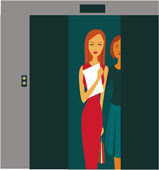
In the first few minutes of the film, Clarice Starling, our heroine, runs the gauntlet at the FBI training center. She’s called in to meet with her supervisor. She enters an elevator filled with huge, young, testosterone laden men. She looks quite tiny and vulnerable – this young woman in an impossibly male world. That’s your Save the Cat! moment. A glimpse into her soul. Vulnerability. That’s what it is all about.


JAWS
Following the teaser of the initial shark attack, we find Chief Martin Brody in bed with his wife. Through bits of dialogue, we discover that Brody has a pathological fear of water – and lives on an island. That duality within Brody is quite funny – and endears him to us immediately.


THE VIRGIN SUICIDES
One of my favorite films, THE VIRGIN SUICIDES is beautiful, complex study of the effects of sexual repression on adolescent girls. I’ll be blogging more about this film in the future. For now, I’ll limit remarks to a great Save the Cat! moment. Cecilia, the youngest of the virgins, has just attempted suicide. In the doctor’s office, the doctor says “What are you doing here, honey? You're not even old enough to know how bad life gets.” Cecilia replies “Obviously, Doctor, you’ve never been a 13-year old girl.” That bold smack of irony, that in your face moment bonds us to Cecilia, and through Cecilia, to all of the virgins.

THANK YOU FOR SMOKING
Anti-heroes are not immune to Save the Cat’s! claws. One of the challenges of a film such as THANK YOU FOR SMOKING is to take a reprehensible character – such as a snarky, self-congratulatory tobacco lobbyist also known as “Yuppy Mephistopholes” – and make the audience care enough about him to stay in their seats. We get a bit of a double bump here; number one, Nick Naylor is such an absolute over-the-top bullshitter, we can’t wait to see what he pulls next. What keeps us there, however, is a glimpse into his heart and soul. His son Joey has come over to stay for the weekend; the two watch a movie late at night. Joey stretches out and drowses, sprawled over his father like a contented pup. Nick oh-so-tenderly strokes his son’s hair. He truly loves this kid, and for that, we not only forgive him, we cheer him on.

And there it is. See? As Blake would say, “It’s EASY!”

WRITING ASSIGNMENT:
Create your own Save the Cat! moment. Establish a character and a set-up. Determine what it is about this character that will take us along for the ride. You can, of course, save a cat … or you can try for something subtle and layered. It's your story. You decide.

coming soon .... "Married to It"